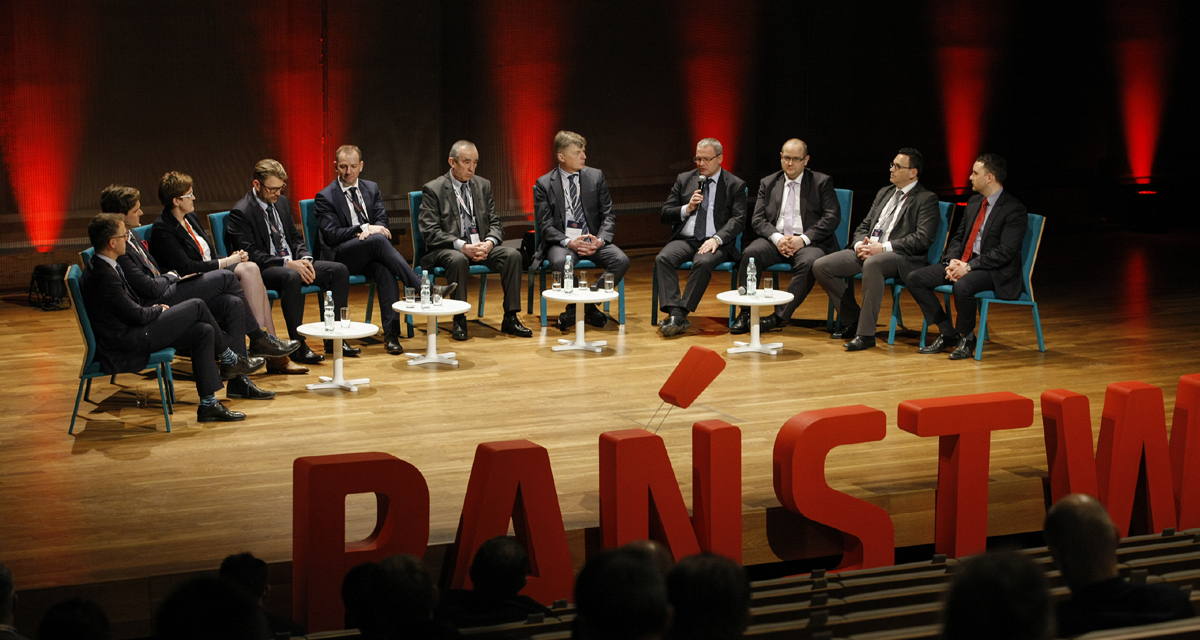
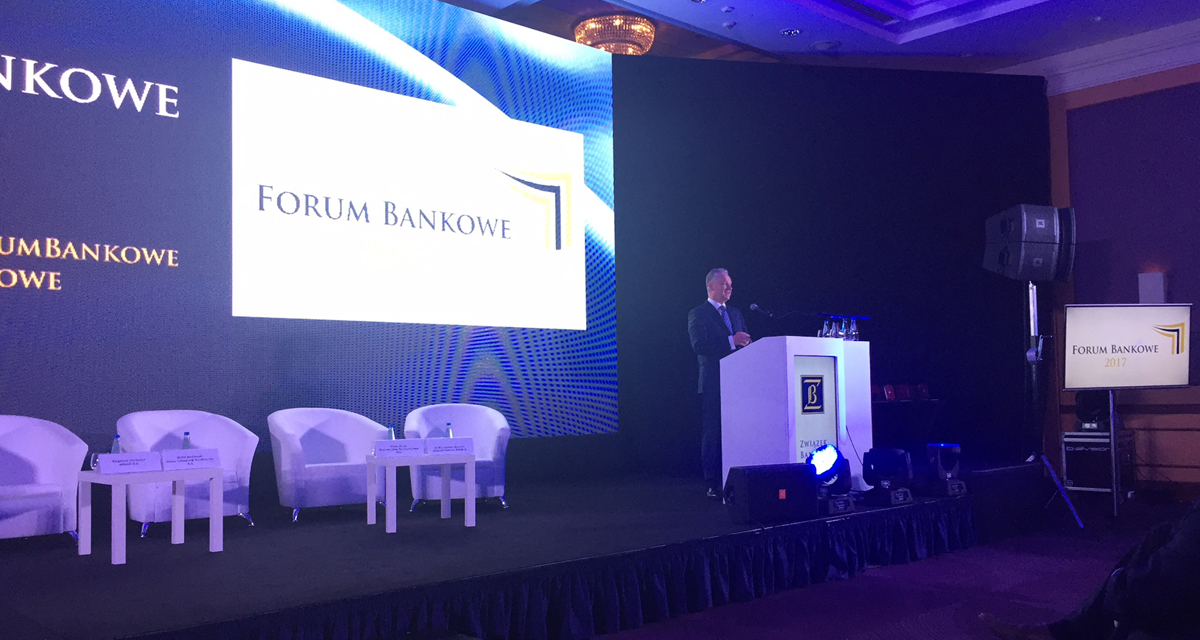
Góral pointed to the ever so tight co-operation between the banking sector and public administration. The ‘Family 500+’ Program played a crucial role in kick-starting it. Piotr Alicki – President of the Board of the National Clearing House – shared this opinion and further emphasized that the smooth implementation of the ‘Family 500+’ Program was in no small part possible thanks to the cooperation with companies such as Asseco.Adam Góral also touched on the topic of fintechs, stating that banks have a significant advantage over them as institutions enjoying public trust.

Telemedicine is not only an advanced solution that improves treatment. It is also the quickest way of improving the quality of patient care and reducing consultation waiting times. Moreover, it allows for enhanced communication within health centers – one of the improvements is the possibility to conduct inter-departmental consultations without having to physcially move between departments.On the one hand, the development of telemedicine means a better and more efficient patient care. On the other hand it provides hospitals with an opportunity to optimize costs and modernize their current operations. The use of information technology is one of the pillars of the Digital Agenda for Europe, which sets out key initiatives aimed at improving the economic situation and promoting sustainable future in a digital society . According to a study conducted by IDC, more than 65% of health care centers will provide means of contacting patients via mobile devices by 2018, and more than 70% will use applications to track and monitor their patients’ condition .Innovation – linchpin of hospitals modernizationIndependent Public Health Care Complex in Kędzierzyn Koźle is one of the largest hospitals in the Opolskie region. The facility consists of 16 departments and 18 specialist outpatient clinics. It has a surgery unit and a labor unit, as well as a large number of laboratories and diagnostic facilities. Investment in innovation allows the hospital to grow at an impressive pace – it also pioneered the use of IT systems during treatment.Marek Staszewski, Director of the Health Care Complex in Kędzierzyn Koźle: Our patients follow two parallel paths. The first one sees them use the services provided by our hospital, in the following order: registration/ admissions, department/ particular facility, surgical unit, and the diagnostics unit. Simultaneously, an electronic profile of each patient is created within the hospital’s internal network. This electronic profile follows him or her, and often ... is actually much quicker than the patient. It may happen that a patient returning to an outpatient clinic after a CT scan or ultrasound only to be surprised that their results are already on the doctor’s computer screen. This is possible thanks to modern IT solutions that significantly facilitate assessment and treatment.As part of implementing its development strategy and improving the quality of patient care and the work of medical staff, the hospital has decided to implement the Asseco Medical Management Solutions, with an integrated video messenger functionality. The implemented solution will support the management of both its health care activities (HIS), as well as its administrative activities (ERP).As part of the agreement with the hospital, Asseco Poland also provided 20 ‘Skype for Business’ licenses. This will allow staff members to conduct video conferences, including inter-departmental consultations – the Health Care Center in Kędzierzyn Koźle has two locations, about 8 kilometers apart. The chosen solution will also support other medical consultations and meetings.Krzysztof Groyecki, Vice President of Asseco Poland: AMMS is a comprehensive solution for hospitals. We created it knowing the needs of medical staff and patients, but also according to the most important IT trends. Certainly, telemedicine is one of them. That's why I am very pleased that, acting together with Microsoft, we can offer our users video consultations via a modern online messenger such as ‘Skype for Business’.Joint action for the development of telemedicine in PolandThe implementation of the AMMS solution with video consultation capability via ‘Skype for Business’ at the Health Care Facility in Kędzierzyn Koźle is the result of an agreement signed between Asseco Poland and Microsoft Poland in October 2016. It allows for an integration of HIS (Hospital Information Systems) with ‘Skype for Business’ video communication facility delivered by Microsoft.Wojciech Życzyński, Director of Public Sector Sales at Microsoft Poland: The development of telemedicine services is key for sustainable development of entire health care centers. It is also a nod to the patients who are now more likely to actually consult specialists and save time, which often plays a crucial role in quick recovery.
Patryk Wasilewski IR Manager at Asseco Poland: At Asseco Poland we use a variety of channels to communicate with our shareholders, including dedicated company websites, such as inwestor.asseco.com. We work closely with market analysts and economic and financial media. We participate in a number of investor meetings and conferences, both in Poland and abroad. Moreover, via our official Twitter and LinkedIn profiles we’re active on social media, which forms an important source of information about the company. There you can find not only the latest news on Asseco, but also links to opinions given by our representatives. We’re open to multi-channel communication with the market and we see that shareholders and analysts appreciate this.

Andrzej Dopierała, CEO of Asseco Data Systems: IT has a nationality. Ten out of ten top suppliers for the public sector in the US are from the States. In Poland, on the other hand, five out of ten largest IT suppliers for public authorities are branches of foreign corporations. Further, he stressed that domestic IT companies have the necessary competencies and experience gained, among others, during the implementation of large, complex projects for the central government, which they can use for the benefit of building a secure e-Poland.Dopierała also spoke about the largest hacker attacks perpetrated in recent years and pointed out that their number is growing by 30% year on year. He noted that the state itself is not able to provide sufficient cyber security for the country. This is why the cooperation between the state and the private sector is vital for developing common legal solutions, technology standards, and action plans to counteract cyber attacks and treating them as part of a larger crisis management strategy.Zdzislaw Wiater, Director of the Military Section at Asseco Poland, also devoted much attention to security issues. He moderated and participated in the defense debate. Wiater: The military capability of each state is currently measured not only by the scale of weapons it has but also whether this state uses advanced IT solutions; soon, the latter factor will be decisive when judging each state’s military might and its defense capabilities. He stressed that a skillful combination of new technologies and armed equipment is the key to succeed in the defense sector.Asseco experts also took part in debates on the energy sector and health care. Tomasz Bendlewski, Director of Energy and Gas Division at Asseco Poland : Energy companies must find new sources of income. He indicated that profits brought by sales of electric energy are stable, but not impressive. He argued that the offer addressed to end consumers should be as flexible as possible. However, any changes in the industry should be carried out very carefully and thoughtfully, given the significance of energy security.Krzysztof Groyecki, Vice President of Asseco Poland, participated in the health care debate which addressed the P1 platform, among other issues. Groyecki: A system being designed for more than a year is doomed to fail because the world is changing too fast for that. We paid attention to the need for modularity. No more gigantomania in health care. Projects should be smaller and easy to understand for the people responsible. He also added that according to him, the ‘IT for health care’ concept is already out of date. IT is embedded in health care and, in order to survive within health care, it needs to develop at thus far unseen pace.

Asseco Poland will develop a light-weight, web-based client application for Monitoring and Control of cube-sat experiments. The tool is called EUD4MO (EGOS User Desktop 4 CCSDS Mission Operations Services). The application developed by Asseco will expose the capabilities of Mission Operation Services for Monitoring and Control of satellites to distributed users. These capabilities are based on modern international standards of the Consultative Committee for Space Data Systems (CCSDS) Mission Operations (MO) Framework. Having access to these generic capabilities through a web-interface will reduce costs and facilitate the exchange of experiences and observations between the parties involved. The new project involving Asseco Poland will be carried out for the European Space Operations Centre (ESOC), located in Darmstadt, Germany. It forms part of a larger collaboration between Asseco Poland and the European Space Agency, which dates back to 2014.Zdzisław Wiater Deputy Director of the Public Administration Division at Asseco Poland: Cooperating with ESA on this project gives us an opportunity to gain further experience and to strengthen our competencies within the space sector. This sector will grow rapidly in the coming years. It is, therefore, very important for Polish companies to have a stake in this and be a partner in the implementation of such projects, which are also planned by the government.The European Space Agency is an intergovernmental agency with responsibilities that include the implementation of it member states’ plans in the area of research and space exploration, as well as learning about the Earth and, more generally, the Solar System. As part of its mission it also provides the citizens of Europe and the rest of the world with the benefits from investments in the space sector. Poland officially joined the European Space Agency in 2012.Global objectives of the ESA project were presented in a video format, published by the European Space Agency here: https://www.youtube.com/watch?v=XdGeaJE7yEk
***
The view expressed herein can in no way be taken to reflect the official opinion of the European Space Agancy.

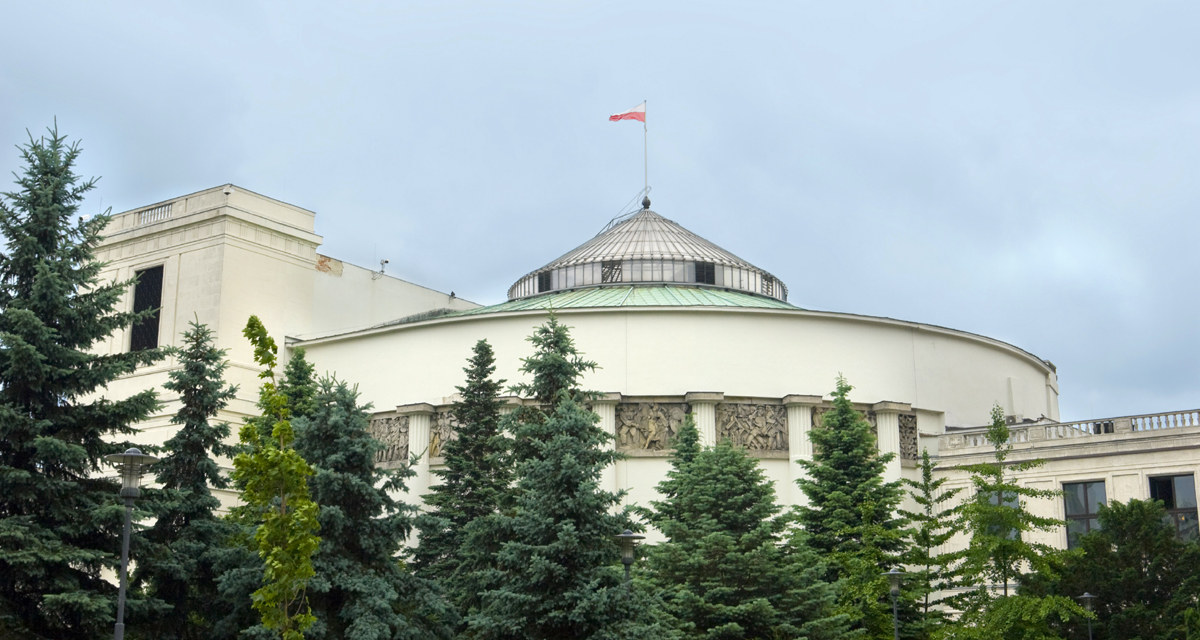
Marek Panek, VP of Asseco Poland: Being a Polish company means we are proud to implement this project at the Sejm of the Republic of Poland. Asseco is the largest provider of software and a proven and trusted partner to the public sector. Andrzej Grzegrzółka, Director of the Press Office at the Chancellery of the Sejm: To paraphrase a line originally uttered by the Working Class Woman character from the TV series ‘Czterdziestolatek’, the 21st century made this decision for us by. Modern and innovative technological solutions will improve the professionalism and the security of the work done at the Lower Chamber.The new Voting Support System comes with the right software, as well as dedicated devices, which form part of the equipment in each deputy’s work space in the Assembly Room. Acting as a management panel, these devices are used during the voting process held there. They were designed as to allow for a connection with the central Voting Support System, audio system, and a translation service, all via a local area network (LAN). These readers offer a variety of new features, such as. the possibility to use remote control for people with disabilities, who cannot sit in the deputies’ benches. They also have a color liquid crystal display (LCD) touchscreen, which, among other things, displays the status of a particular vote. Other functionalities include: voice transmission, live and direct from the deputy’s work space through an built-in microphone; and the ability to charge mobile devices through a built-in USB port. The security of the voting will be supervised by an authorization system checking the deputies’ personal ballot.Andrzej Grzegrzółka: Nearly 2 500 voting sessions were held in the Lower Chamber of the Parliament in 2016 alone. This is the largest amount for quite some time. Deputies are working very hard and the current system is in place since 2001. Chancellery of the Sejm chose the best offer, in every respect. Andrzej Dopierała, President of the Board at Asseco Data Systems: It is worth noting that this project will require us to work under substantial time pressure. We will have to perform the entire implementation within a single month.A consortium consisting of Asseco Data Systems (acting as consortium leader), Asseco Poland, and Asseco Lithuania will be responsible for the implementation of the new system. Marek Panek: This is an example of cooperation between Asseco Group member companies. We will take advantage of the experiences of our Lithuanian team, which has already completed a similar project at the Lithuanian Parliament.The implementation will be carried out during a break in the proceedings of the Lower Chamber of Parliament. Removal and replacement of the existing equipment, conducting of all the necessary system tests and installation modifications, in case such a need arises, are scheduled for August 2017.
A package of the most important press materials: multimedia, documents and data about Asseco ready to use.


This website uses cookies and other tracking technologies to assist with navigation and feedback, analyze the use of our products and services, support our promotional and marketing efforts, and provide content from third parties. View more cookie settings to manage your preferences.
More information about cookies and data storage can be found in our Privacy Policy.