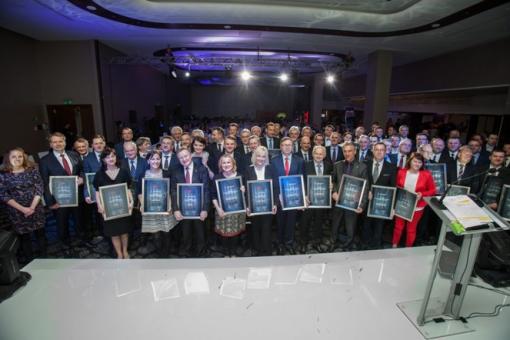
The gala ceremony was attended by representatives of major Polish companies as well as the public sector, including Jacek Jankowski, Polish Ambassador to Ethiopia where Asseco carries out a project related to the electricity market.
This year’s event took place in a unique modern setting. The evening included a performance by Ethiopian pianist Girma Yifrashewa, who is fascinated with the artistic work of Frederic Chopin.

The Copper Health Center (Miedziowe Centrum Zdrowia) based in Lubin as well as the County Hospital (Szpital Powiatowy) in Głogów will use the Asseco Medical Management Solutions (AMMS). Under the concluded agreements, Asseco will implement the software allowing these medical institutions to offer e-health services, which will help improve their work efficiency and the quality of patient services.
“Asseco will provide each of the hospitals with over a dozen modules of the AMMS system, including a number of HIS-class applications, such as Electronic Medical Records and the Medical Information Portal,” said Andrzej Motkowski, Expert Key Account Manager at Asseco Poland. “Moreover, the Głogów-based hospital will deploy the mHOSP system dedicated for iOS and Android platforms, allowing their doctors to access the software solutions right at the patient bedside, with the help of mobile devices such as tablets” he added.The newly commenced projects are a continuation of Asseco’s work in Lower Silesia. A few weeks earlier, the company signed a contract with a consortium of nine medical centers operating in that region.***AMMS is a comprehensive IT solution dedicated to large and medium-sized hospitals, polyclinics, medical centers, outpatient clinics and emergency departments. The solution provides support for the hospital’s medical departments (HIS) and administrative departments (ERP). AMMS features a number of functionalities for the identification of patients, including registration of referrals with the help two-dimensional barcodes, as well as retrieval of patient data from identity documents. It also enables printing and reading of doctor referrals in the encoded form. Transmission of such documents in electronic format between different medical centers reduces the time of patient registration and admission, while eliminating errors that might occur due to incorrect reading of handwriting.

Sales of Asseco Group’s proprietary software solutions continue to grow, accounting for as much as 83 percent of total revenues in the first quarter of 2015. The Group’s revenues are diversified into the following sectors: general business – 48 percent, banking and finance – 41 percent, public institutions – 24 percent. In the first three months of 2015, the share of foreign operations in the revenue structure increased to 78 percent and amounted to PLN 1.23 billion. During the reporting period, Asseco Group signed 1,995 contracts. Such a high level of sales in the first quarter of 2015 resulted from stronger revenues achieved across all the key markets where the Group companies operate. In Poland, we continued or completed the implementation of significant contracts, among others, for PKO Bank Polski, Bank Ochrony Środowiska, Orange Poland, Agency for Restructuring and Modernization of Agriculture (ARiMR), and Agricultural Social Insurance Fund (KRUS). A considerable contribution to the Group’s results was provided by our Israeli companies, which maintained a dynamic revenue growth while managing to improve their profit margins. In the first three months of 2015, these companies generated PLN 877 million in sales, recording a 28 percent increase over the last year’s figures. In Central Europe, a substantial growth was achieved in Slovakia, helping to compensate for the prevailing stagnation in the Czech Republic. Our South Eastern European companies expanded their operations in the sectors of banking and payment solutions. They generated PLN 98 million in revenues and improved their profitability by selling more proprietary solutions. In the Western European market, we recorded a 10 percent growth on the back of higher revenues in Spain and in Germany. We observed some promising business development also in the region of Eastern Europe, where our sales increased by 11 percent year on year.


The project will result in the development of software to be operated on a regional scale, which will integrate IT systems used by individual partners in this undertaking. Such a solution will allow for easy exchange of electronic medical records of Lower Silesian patients. This will contribute to a significant improvement of the quality of patient services. In addition, quick access to patient data will increase the efficacy of treatment. The data security standards will be upgraded as well. Other important benefits will include the streamlining of medical personnel work and financial savings. The project is scheduled to be completed in April 2016.“The regional system of electronic medical records is an important element of informatization in this region,” said Krzysztof Groyecki, Director of the Healthcare Systems Division at Asseco Poland. “In less than a year, the system will be connected at 9 large hospitals in Lower Silesia, but in the future it will be available also for other medical centers in the region,” he added.The project involves the creation of the Electronic Medical Records Archive which will be integrated with local IT systems used by individual hospitals. Not all of such systems have been provided by Asseco. This is however not a problem because the newly developed system will be able to cooperate with software from various vendors. The contractor will be also responsible for the supply of IT infrastructure. Moreover, Asseco is going to upgrade IT systems used by 3 medical institutions to the new version of AMMS (Asseco Medical Management Solutions).

The ranking presents 1000 companies based in the European Union. The scoreboard of industrial R&D investments is published by the European Commission on an annual basis. It takes into account the total value of investments in research and development that are funded by the companies themselves, regardless of the actual location of such activities.

The ranking winners have been selected by local authorities of individual provinces. They voted to choose the companies which, in their opinion, are important regional employers and tax payers and contribute to the wellbeing of local communities. The prize-winners were announced during a gala ceremony held on 15 April. Asseco’s award was collected by Ewa Kryj, the company’s spokesperson.“In recent years, the Subcarpathian Province has seen much economic development and strengthened its position. This has been accomplished largely on the back of EU support, without which such dynamic changes would not be possible, as well as thanks to the initiatives undertaken by local authorities, scientific and business organizations, and inhabitants of the region. However, achieving success is a long-term process, which entails a number of challenges,” commented Adam Góral, CEO of Asseco Poland. “In the next few years, one of such challenges will be to develop a knowledge-based economy. It will help turn Subcarpathia into an attractive place for both entrepreneurs as well as young and ambitious people. In this case, business community will play a key role,” he added.
A package of the most important press materials: multimedia, documents and data about Asseco ready to use.


This website uses cookies and other tracking technologies to assist with navigation and feedback, analyze the use of our products and services, support our promotional and marketing efforts, and provide content from third parties. View more cookie settings to manage your preferences.
More information about cookies and data storage can be found in our Privacy Policy.